

Five principles that shape how we work with leaders
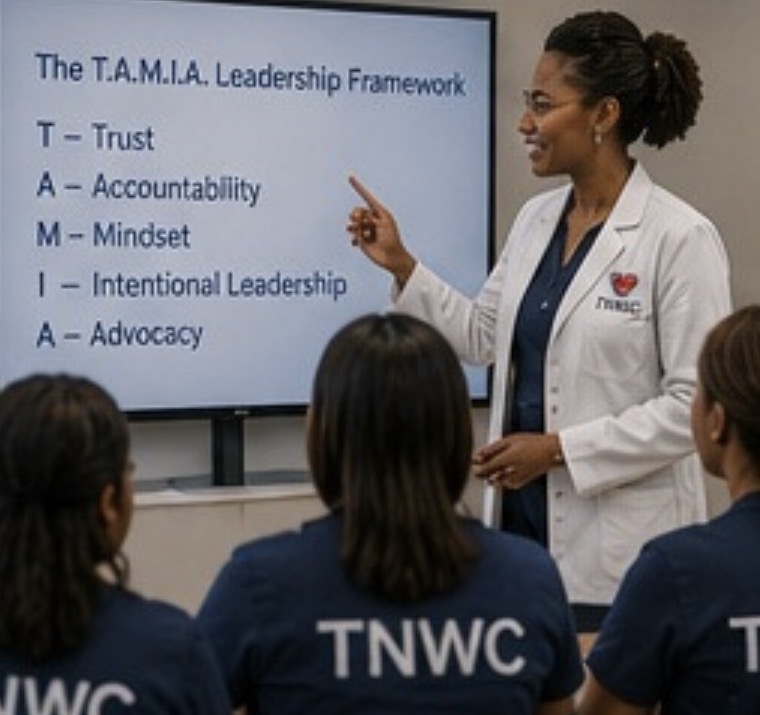
T.A.M.I.A. is not a slogan. It is the working framework behind assessments, training and speaking engagements: Trust, Accountability, Mindset, Intentional Leadership and Advocacy.
Trust
Built in ordinary moments, tested in hard ones.
Trust is built in the small moments long before it is tested in the hard ones. Leaders earn it through consistency, follow-through and telling people the truth early.
What it looks like in practice
- Saying what you will do and then doing it, including the small commitments nobody would notice you dropping
- Delivering difficult information early rather than waiting until it is unavoidable
- Treating a staff member's concern as data rather than as a complaint
- Explaining decisions, including the ones that will not change
Why it matters for readiness leadership
Readiness depends on information moving upward. A teacher who does not trust leadership will not report the near miss, the expired medication or the moment they were unsure what to do. Every unreported small thing is a rehearsal that did not happen.
Questions to sit with
- When did someone last bring me bad news early, and how did I respond?
- Which commitments have I quietly let slide this month?
- Would my newest staff member tell me if they made a medication error?
Trust supports the accountability pillar of the TAMIA Promise. Findings can only be named plainly in a program where honesty is safe.
Accountability
Clear expectations, applied to leadership first.
Accountability without cruelty. Clear expectations, honest feedback and shared ownership of outcomes, applied to leadership first.
What it looks like in practice
- Writing expectations down so accountability is not a matter of memory or mood
- Naming the standard before the mistake, not after it
- Owning your own missed commitments publicly before addressing anyone else's
- Separating a person's worth from a process failure when giving feedback
Why it matters for readiness leadership
Health and safety systems fail quietly when nobody owns them. A corrective action without a named owner and a date is a wish. Accountability is what turns a report into a change.
Questions to sit with
- Does every open safety item in my program have a name and a date attached?
- Am I holding people to a standard I have actually communicated?
- When something failed last quarter, what did I change about my own practice?
Accountability is the pillar the TAMIA Promise leans on hardest. Owners and dates are how a finding becomes an outcome.
Mindset
How you think under pressure sets the room.
How a leader thinks under pressure sets the emotional temperature of the entire team. Mindset is a practice, not a personality trait.
What it looks like in practice
- Slowing your own reaction by a few seconds during an incident so the room follows your pace
- Treating an unexpected finding as information rather than as an accusation
- Naming your own uncertainty out loud instead of performing certainty
- Choosing curiosity first when something goes wrong: what made this the reasonable action at the time?
Why it matters for readiness leadership
In an emergency, staff regulate off the most senior person present. A leader who panics multiplies the panic. A leader who stays deliberate buys the team the seconds it needs to follow the plan.
Questions to sit with
- How did I sound the last time something went wrong in my building?
- Do my staff bring me problems, or do they bring me solutions they hope I will not question?
- What am I doing to steady myself before a hard conversation?
Mindset supports the preparedness pillar. Plans only work if the people executing them can think clearly while doing it.
Intentional Leadership
Design the culture instead of inheriting it.
Nothing meaningful happens by accident. Intentional leaders design the culture they want instead of reacting to the culture they inherited.
What it looks like in practice
- Deciding in advance what your program will be known for, and building routines that produce it
- Choosing what to stop doing, not only what to add
- Putting readiness on a calendar rather than leaving it to the next crisis
- Building onboarding that transmits the standard rather than assuming new staff will absorb it
Why it matters for readiness leadership
Every program has a culture. The only question is whether anyone chose it. Programs that drift into their habits are the ones surprised by their findings.
Questions to sit with
- If I described my program's culture honestly, is that the culture I intended?
- What routine in my week exists specifically to protect children's safety?
- What did I inherit that I have never actually decided to keep?
Intentional Leadership underwrites consistent quality. A standard applied everywhere has to be designed, not hoped for.
Advocacy
Speaking for those who cannot yet speak for themselves.
Speaking for the people who cannot yet speak for themselves, whether that is a child in a classroom or a nurse on their worst shift.
What it looks like in practice
- Asking for the resource in writing, even when you expect the answer to be no
- Escalating a health concern on behalf of a family that has stopped being heard
- Protecting staff capacity as a safety issue rather than a comfort issue
- Naming a risk to a board or funder in terms of the child it would affect
Why it matters for readiness leadership
Children in early learning settings cannot report an unsafe system. Neither can an exhausted staff member who has learned that speaking up costs more than staying quiet. Advocacy is how both get represented in decisions.
Questions to sit with
- Whose interests were missing from my last significant decision?
- When did I last ask for something on behalf of my team and get told no?
- Am I protecting my staff's capacity, or spending it?
Advocacy is the child-centered safety pillar in leadership form. It keeps the child at the center of decisions made in rooms they will never enter.
The same framework, applied to program review
Every audit and quality review follows the same underlying logic as the leadership framework: assess honestly, prioritize what matters, improve with real tools, and follow up to confirm it held.
Assess
Look at the systems as they actually run on a normal day, not as they read on paper.
Prioritize
Separate what could hurt a child today from what needs attention this quarter.
Improve
Put usable processes, tools and staff skill in place, with owners and dates attached.
Follow Up
Come back, verify the change held, and reassess so progress is documented.
A framework that answers to a promise
Every child in your care deserves adults who are prepared, systems that hold up under pressure, and leaders who are told the truth early enough to act on it. That is what we promise to bring to your program.
Child-centered safety
Nursing judgment
Preparedness
Accountability
Practical improvement
Consistent quality
Ready to see where your program actually stands?
Start with a discovery consultation. No cost, no pressure, and a clear recommendation at the end of it.